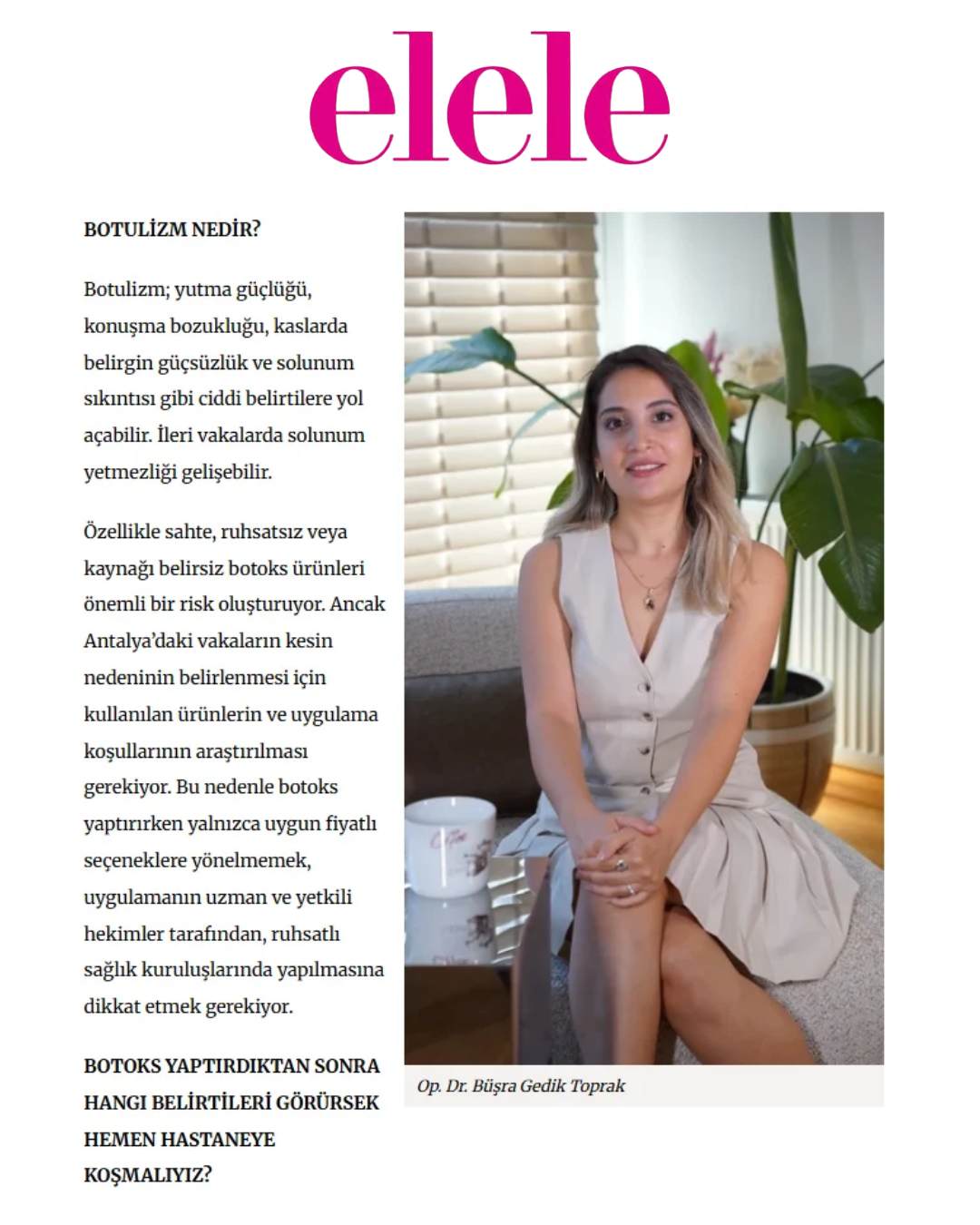
DİDEM SEYMEN – Plastic, Reconstructive and Aesthetic Surgery Specialist Op. Dr. Büşra Gedik Toprak explained the causes of facial volume loss and discussed fat grafting, a procedure that may be considered particularly in cases of significant volume loss. Weight loss, the aging process, and genetic factors can alter the distribution of facial volume over time. …

DİDEM SEYMEN – Plastic, Reconstructive and Aesthetic Surgery Specialist Op. Dr. Büşra Gedik Toprak explained the causes of facial volume loss and discussed fat grafting, a procedure that may be considered particularly in cases of significant volume loss.
Weight loss, the aging process, and genetic factors can alter the distribution of facial volume over time. In cases of significant volume loss, particularly in the cheeks, temples, and midface, fat grafting using the patient’s own fat tissue may be considered as an alternative to dermal fillers.
What Causes Facial Volume Loss?
The changes associated with aging do not occur solely on the surface of the skin. The amount and distribution of facial fat, bone structure, and supporting tissues may also change over time. In particular, loss of fullness in the midface, a lower appearance of the cheeks, hollowing of the temples, and increased prominence of the under-eye areas can make the face appear more tired.
A similar condition may occur following significant or rapid weight loss. As the body’s overall fat percentage decreases, fat tissue in the facial region may also diminish. Consequently, some individuals may notice that their faces appear more hollow or have sharper contours after losing weight.
When only a small amount of volume restoration is needed in a limited facial area, hyaluronic acid-based dermal fillers may be considered. However, when significant volume loss affects multiple areas, such as the cheeks, midface, temples, and jawline, the amount of filler required may increase.
In cases of widespread facial volume loss, facial fat grafting using the patient’s own fat tissue may be considered as one of the commonly used techniques in plastic surgery.
During the procedure, fat tissue is typically harvested from suitable donor areas, such as the abdomen, waist, or thighs. The harvested fat is then processed and injected in small amounts into facial areas requiring volume restoration. The objective is not to overfill the face but to restore lost volume in a way that complements the patient’s natural facial anatomy.
Planned According to Individual Facial Anatomy
Facial fat grafting can be performed in suitable patients without the need for extensive surgical intervention. Fat tissue is harvested from an appropriate donor area, such as the abdomen, waist, or thighs, processed, and subsequently injected into areas of the face where volume loss has occurred.
The scope of the procedure is determined according to the amount of fat required, the areas to be treated, and the patient’s individual facial anatomy. For this reason, fat grafting may be considered particularly for individuals experiencing volume loss in multiple facial regions.
Fat Tissue Provides More Than Just Volume
One of the distinguishing features of fat grafting is the use of the patient’s own tissue. Adipose tissue consists not only of fat cells but also contains supporting cells and adipose-derived stromal and stem cell populations.
The potential effects of these cellular components on tissue quality, skin structure, and regenerative processes are among the subjects being investigated in scientific research.
Due to these biological properties, fat grafting may be preferred not only to restore lost facial volume but also for its potential to support tissue quality and contribute to a healthier, more revitalized appearance of the skin in the treated areas.
Preserving Natural Facial Expressions Is Essential
The primary objective of fat grafting is not to create excessive facial fullness. Rather, the goal is to restore volume lost through aging or weight loss while preserving the individual’s natural facial proportions and expressions.
A thorough understanding of the different anatomical layers of the face is essential for determining where the fat should be injected and in what quantities.